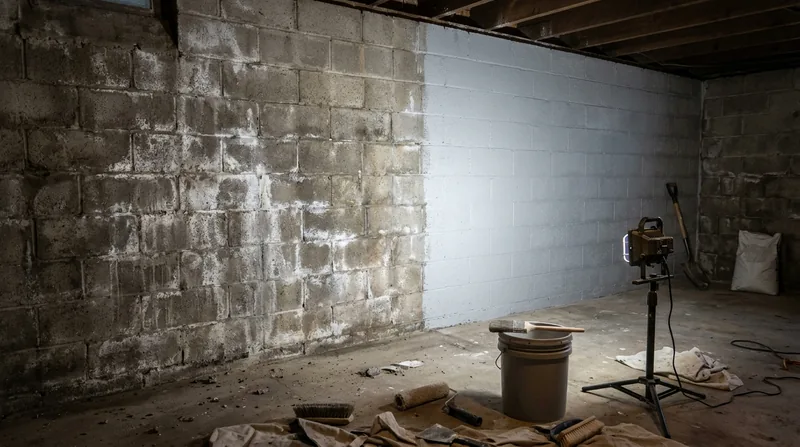




Pueblo sits where the Arkansas River meets Fountain Creek, and that geography drives what happens to basement walls here. The heavy clay and Pierre shale under Bessemer, Mesa Junction, and the Eastside swells when wet and shrinks when dry, so walls crack and seep. Older brick and stone cellars near the old steel mill were never sealed against hydrostatic pressure, and 1950s to 1970s ranches on the Northside show the same block-wall seepage. Basement Wall Sealing in Pueblo starts with an honest read of the wall: surface dampness and efflorescence can be sealed, but active water needs drainage first. We prep, clean, and seal walls with penetrating or membrane products, and we tell you when a sealer is the wrong tool. If you are still deciding between sealing and a full system, start with our basement waterproofing service.
Why Basement Wall Sealing Matters in Pueblo's Clay and Shale
Pueblo's soil is the main reason basement walls seep. Clay and shale hold water against the foundation long after a storm, and the spring snowmelt in the Arkansas and Fountain Creek valleys keeps the water table high. Summer monsoon runoff off the foothills hits walls fast, and the sharp freeze-thaw swings crack parging and open hairline joints. Sealing is the right first step when the wall is damp, chalky, or stained with efflorescence but not actively leaking.
- Efflorescence and white salt staining tell you moisture is moving through the masonry, not just sitting on it.
- Hairline cracks in block or poured walls let in dampness that a penetrating sealer can close.
- Damp musty smells in a finished lower level usually point to wall seepage, not a plumbing leak.
- Sealing alone will not hold back hydrostatic pressure, and we say so before you spend money.
If water is pooling at the wall base or the floor is wet after rain, the fix is drainage, not a coat of sealer.
Key info: A 1920s brick cellar in Bessemer with chalky walls and no standing water is a good sealing candidate. The same wall with water running in at the cove joint after a monsoon is a drainage problem, and we will tell you that on the inspection.
For official guidance on permits and contractor rules in Colorado, check the Colorado Department of Local Affairs and your local building department before any structural work.
How We Seal Basement Walls in Pueblo Homes
We start by finding out why the wall is damp. On a Northside ranch with a finished lower level, that means checking the wall base, the cove joint, and the window wells before we touch a sealer. On an older stone cellar, we look at the mortar and parging first. The goal is to seal the right wall for the right reason, not to coat every surface and hope.
- We inspect the wall, floor joint, and window wells to separate surface dampness from active water intrusion.
- We remove efflorescence, loose parging, and old failing coatings so the sealer bonds to sound masonry.
- We repair cracks and mortar joints before sealing, because a sealer over an open crack will not hold.
- We apply a penetrating sealer for damp masonry or a membrane coating where the wall needs a flexible barrier.
- We check grading and downspout extensions so roof water is not dumped back against the wall.
If the inspection shows hydrostatic pressure, we recommend an interior drain tile system instead of a sealer, and we explain why in plain terms.
Key info: On a 1960s block ranch in Pueblo West with damp walls but a dry floor, a penetrating sealer and downspout extensions solved the problem. A nearby home with water at the cove joint needed interior drainage, and sealing it would have been a waste of money.
Sealing Methods We Use on Pueblo Basement Walls
Not every wall takes the same product. We match the method to the wall material, the moisture pattern, and whether the wall is bare or finished. The table below shows what we use and when.
| Approach | Description | Best for |
|---|---|---|
| Penetrating sealer | Soaks into masonry and blocks moisture movement without a surface film. | Damp brick, block, or stone walls with efflorescence. |
| Membrane coating | Flexible surface barrier that bridges hairline cracks and resists vapor. | Poured walls with fine cracks and light seepage. |
| Crack repair plus sealing | Epoxy or polyurethane injection closes the crack before the wall is sealed. | Walls with visible cracks that leak during rain. |
| Drainage-first recommendation | Interior perimeter drain and sump instead of sealer when pressure is active. | Wet floors, water at the cove joint, high water table. |
| Exterior membrane | Dimple board and waterproof membrane applied to the outside of the wall. | Open excavation jobs and walls being rebuilt. |
We recommend the least invasive method that actually solves the problem, and we put that in writing on the estimate.
Basement Wall Sealing Cost in Pueblo: What to Expect
Most basement wall sealing jobs in Pueblo start around $1,500, and that figure covers a typical wall run with surface prep, efflorescence removal, and a sealer application. The price moves up with wall length, the number of cracks that need injection first, and whether the wall is bare or finished. Access matters too: a cellar in Mesa Junction with a low ceiling and stone walls takes longer than a clean poured wall in a 1990s subdivision.
Getting two or three estimates is smart because the diagnosis drives the price. One contractor may quote a sealer for a wall that needs drainage, and another may quote a full system for a wall that only needs sealing. Ask each one to explain what they found and why their method fits. Our full pricing overview shows how the numbers break down by scope.
Downspout extensions, grading corrections, and window well repairs can add to the job, but they are often the cheapest part of keeping a wall dry. We list them separately so you can see what you are paying for.
What to Look for When Hiring a Basement Wall Sealing Contractor Near Me in Pueblo
Hiring in Pueblo means asking the same questions you would ask anywhere, plus a few local ones. Basements are less common here than in the Midwest, so not every contractor has deep experience with clay and shale walls. Ask how they tell surface dampness from hydrostatic pressure, and listen for a clear answer.
- Confirm the contractor is licensed and insured, and ask for a certificate before work starts.
- Get at least two or three written estimates that describe the method, not just a price.
- Ask for local references from jobs in Pueblo, Pueblo West, or the surrounding towns.
- Check whether a permit is needed for crack injection or structural work with the local building department.
- Ask about the warranty terms and whether they transfer if you sell the home.
If a contractor cannot explain why they chose a sealer over drainage, keep looking. You can request a free estimate and we will walk the wall with you.
When Sealing Is Not Enough: Pueblo's Hydrostatic Pressure Problem
Pueblo's clay soil holds water against the foundation, and no sealer stops that pressure. If you see water at the cove joint, a wet floor after rain, or a sump pump running constantly, the wall needs drainage before any coating. We inspect for that first, and we tell you plainly when sealing is the wrong answer.
For walls with active seepage, an interior perimeter drain and sump basin move the water before it reaches the floor. For walls that are bowing, carbon fiber straps or wall anchors address the movement, not the moisture. Our foundation crack repair service handles the injection work when a crack is the source.
Key info: After a July monsoon in Pueblo, we inspected a 1950s ranch where the owner had sealed the walls twice. Water was still entering at the floor joint. The fix was an interior drain tile system, and the sealer had been money spent on the wrong problem.
We would rather tell you that on a free inspection than sell you a sealer that will not hold. Call (719) 717-3300 to set one up.
Basement Wall Sealing in Pueblo: Pricing Guide
| Service | Price | Details |
|---|---|---|
| Single wall sealing with prep | Starting at $1,500 | Includes efflorescence removal, surface prep, and one sealer application on a typical wall run. |
| Crack injection plus sealing | Starting at $1,900 | Epoxy or polyurethane injection on visible cracks before the wall is sealed, priced by crack count. |
| Full basement perimeter sealing | On estimate | Multiple walls, finished areas, or low-clearance cellars need an on-site look before pricing. |
| Drainage-first assessment | Free | We inspect for hydrostatic pressure and tell you if sealing is the wrong answer. |
| Travel | Included | In Pueblo and surrounding areas, no separate call-out or mileage fee. |
| Estimate | Free | Response within 24h at (719) 717-3300, no obligation to book. |
Indicative pricing, the exact cost depends on square footage, finish, and site access. Free personalized estimate within 24h at (719) 717-3300.


