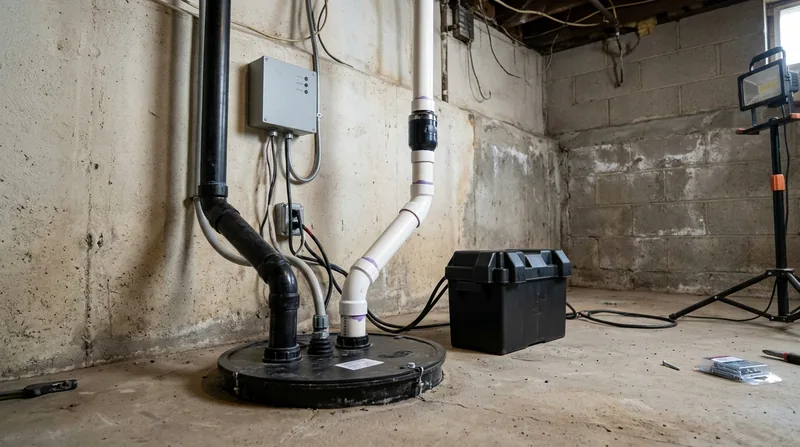




If you own a home in Pueblo with a basement, you already know the sump pump is the one piece of equipment that has to work when everything else quits. Battery backup sump pumps in Pueblo are the difference between a dry lower level and a flooded one when a monsoon storm rolls off the foothills and takes the grid down with it. Our older brick and stone cellars in Bessemer and Mesa Junction sit in heavy clay and Pierre shale that swells hard after spring snowmelt and summer cloudbursts, and the newer ranches on the Northside push the same water into their block pits. A primary pump on house current is only as reliable as the power company, and that is exactly the wrong bet during a storm. We size, install, and test backup systems that keep the basin dry when the lights go out. Start with a sump pump installation and replacement review if your primary pump is older than its service life.
Why a Backup Pump Matters More in Pueblo Than Most Homeowners Think
Pueblo gets its water in bursts, not in a steady drizzle. The Arkansas River and Fountain Creek valleys hold groundwater through the spring melt, and then a July storm can drop an inch in an hour on ground that has baked hard under the high dry sun. That is the pattern that kills primary pumps: long idle stretches, then a hard run. Clay soil and Pierre shale do not absorb that slug of water, so it goes straight to the footing drain and into the basin.
- Power outages during monsoon storms knock out the primary pump at the exact moment inflow peaks.
- Older pumps in 1950s and 1960s Northside ranches fail on age, not on load, and often fail mid-storm.
- Freeze-thaw cycles and sharp temperature swings crack discharge lines and check valves that then leak back into the basin.
- Spring snowmelt in the Fountain Creek valley keeps the water table high for weeks, so a pump can run almost continuously.
A backup system buys you run time on a charged battery, and that run time is what carries you through the outage window.
Key info: A finished lower level on the Northside with a failed primary pump can take on several inches of water in under an hour during a hard monsoon cell. The battery backup is what covers the gap until power returns or you can get to the panel.
For the code side, the City of Pueblo's building department handles permits for work that alters drainage or the sanitary connection of a sump discharge, and the rules are worth confirming before any discharge line is rerouted. You can check current requirements through the City of Pueblo official site.
How We Install a Backup System in a Pueblo Basement
We start by looking at the pit, not the catalog. The basin size, the primary pump's float type, the discharge line diameter, and the available space under the lid all decide which backup fits. On a 1920s Bessemer cellar with a tight stone pit, that often means a compact backup pump with a separate float switch. On a 1990s Pueblo West slab home where the pit is newer and roomier, a larger capacity unit with a higher head rating makes more sense.
- We inspect the basin, the primary pump, the check valve, and the discharge line for backflow and freeze damage.
- We measure pit depth and inflow rate so the backup is sized to real conditions, not a guess.
- We mount the backup pump and its independent float switch so it does not interfere with the primary.
- We install a dedicated battery, charger, and alarm, then wire the system so it charges on house current and runs on battery.
- We test the backup under a simulated outage and confirm the discharge carries water clear of the foundation.
Every install ends with a live test, because a backup that has never run on battery is not a backup.
Key info: In Florence and Penrose, where lots sit closer to the foothills, runoff arrives faster and harder than in town. We size those backups with more run time and check the discharge grade so water leaves the foundation instead of pooling against it. If you are in the 81003 ZIP, see our Pueblo 81003 service page.
Backup Pump Approaches We Use
Not every basement needs the same hardware. The right choice depends on pit dimensions, how long outages typically last, and whether the primary pump is a submersible or pedestal unit. The table below shows the common configurations we install across Pueblo.
| Approach | Description | Best for |
|---|---|---|
| Battery backup pump with independent float | A second pump in the same basin on its own switch and battery | Most Pueblo homes with a standard pit and a working primary |
| Combination primary and backup unit | One integrated unit with a 12V backup and charger | Replacing an aging primary in a tight Bessemer or Eastside pit |
| High-capacity backup with extended battery | Larger battery bank for longer run time during outages | Finished lower levels and homes with high spring inflow |
| Backup with alarm and remote notification | Audible alarm plus a signal when the pump runs or the battery drops | Owners who travel or leave Pueblo homes vacant part of the year |
We match the configuration to the pit and the household, and we tell you plainly when a simple battery backup is enough and when the real problem is a primary pump that needs replacing first.
Battery Backup Sump Pumps Cost in Pueblo: What to Expect
Most homeowners in Pueblo pay from $900 for a standard battery backup installation, and the number moves with the equipment and the pit. A tight stone basin in Mesa Junction that needs a compact unit and a new check valve sits near the low end. A finished Northside basement with a high inflow rate, an extended battery, and an alarm lands higher, because the battery bank and the wiring take more time.
Three things drive the price: the capacity of the backup pump and battery, whether the primary pump or check valve also needs replacement, and how accessible the pit and discharge line are. Getting two or three estimates is smart, and not just on price. Ask each contractor what inflow rate they sized for and whether they tested the unit on battery before leaving. Our full pricing overview lays out the ranges so you can compare apples to apples.
What to Look For When Hiring a Waterproofing Contractor Near Pueblo
Basement work is below-grade work, and the contractor you hire should be set up for it, not treating your sump pit as a side job between plumbing calls. Ask for the license and insurance certificate before work starts, and confirm the coverage is current. Get at least two written estimates that state the pump model, battery capacity, and what testing is included. Check references from jobs in Pueblo, Pueblo West, or Canon City, ideally on homes built in the same era as yours.
Permits matter when a discharge line is rerouted or tied into the sanitary connection, and the City of Pueblo building department is the authority to check with. If your neighborhood has HOA rules about exterior discharge or equipment placement, sort that out before install day. When you are ready to talk, reach us through the contact page and we will set up a free inspection of the pit and primary pump.
Battery Backup Sump Pumps in Pueblo: Pricing Guide
| Service | Price | Details |
|---|---|---|
| Standard battery backup pump install | Starting at $900 | Includes backup pump, independent float, battery, charger, and a live battery test before we leave. |
| Combination primary and backup unit | Starting at $1,250 | Integrated 12V backup with charger, sized for tighter pits and older primary pumps. |
| High-capacity backup with extended battery | Starting at $1,600 | Larger battery bank for longer run time in finished basements with high spring inflow. |
| Alarm and remote notification add-on | Starting at $150 | Audible alarm plus a signal when the pump runs or the battery drops. |
| Travel | Included | In Pueblo and surrounding areas, no separate call-out or mileage fee. |
| Estimate | Free | Response within 24h at (719) 717-3300, no obligation to book. |
Indicative pricing, the exact cost depends on square footage, finish, and site access. Free personalized estimate within 24h at (719) 717-3300.


