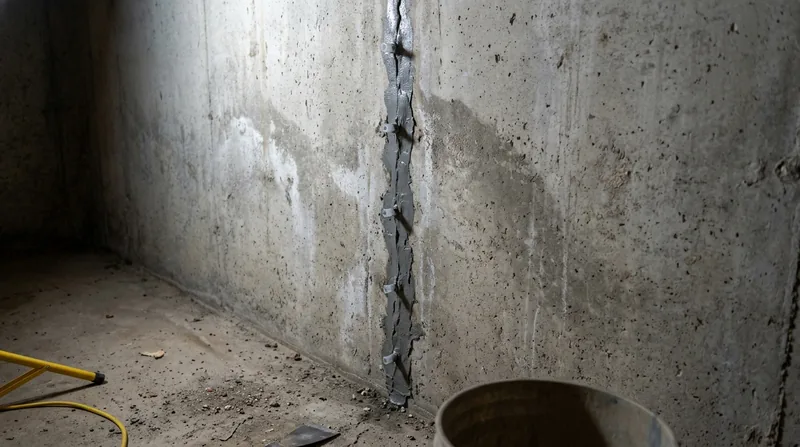




Pueblo sits on heavy clay and Pierre shale that swells with every wet spring and shrinks hard under the high dry sun, and that constant movement shows up as cracks in basement walls and slabs across Bessemer, Mesa Junction, the Eastside, and the Northside. If you are searching for Foundation Crack Repair in Pueblo, the first job is figuring out whether you have a simple shrinkage crack or a wall being pushed by hydrostatic pressure. We inspect the crack, check for efflorescence, moisture trails, and any sign of bowing, then match the repair to what the wall is actually doing. A hairline crack gets injected. A wall that is moving gets a structural answer. We work below grade only, on residential foundations, and we tell you plainly when sealing a crack is enough and when the water behind it is the real problem. Start with a look at our basement waterproofing service if you are also seeing seepage along the wall base.
Why Foundation Cracks Show Up in Pueblo's Clay and Shale
The ground under most of Pueblo is glacial clay and Pierre shale, and that soil does not drain. When the Arkansas River and Fountain Creek valleys take on spring snowmelt, the clay holds water against the foundation and hydrostatic pressure finds every weak point. Older brick and stone cellars in Bessemer and Mesa Junction crack along mortar joints, while 1950s to 1970s block and poured walls on the Northside crack at corners and mid-span. Summer monsoon runoff off the foothills adds a second punch, and the sharp freeze-thaw cycle works those cracks open year after year.
- Vertical cracks usually come from shrinkage and settlement and are the best candidates for epoxy injection.
- Diagonal cracks at corners often signal soil movement and need a closer structural look.
- Horizontal cracks and any inward lean point to hydrostatic pressure and possible bowing wall repair.
- White efflorescence on the wall face means water is migrating through the concrete and leaving salts behind.
- Damp patches that return after rain mean the crack is active, not cosmetic.
None of these should be patched blind, because the crack pattern tells us which repair will actually hold.
Key info: A 1900s brick cellar wall in Bessemer and a poured 1960s wall on the Northside rarely fail the same way. Brick cracks at the mortar and needs tuckpointing and injection, while poured walls usually take epoxy ports directly into the crack.
How We Repair Foundation Cracks in Pueblo, Step by Step
We do not sell a one-size-fits-all patch. Every job starts with a walk of the basement, a moisture reading, and a check of grading and downspouts outside, because water management and crack repair go together. From there we match the method to the crack: epoxy injection for a stable structural crack, polyurethane injection for an active leak, and carbon fiber straps or wall anchors when the wall itself is moving. You can see how this fits into a full foundation waterproofing plan.
- We inspect the crack, the wall, and the exterior grade to confirm whether it is active.
- We clean the crack and set injection ports at the correct spacing.
- We seal the surface and inject epoxy or polyurethane until the material reaches the far side.
- We remove the ports, grind the surface flush, and check the repair.
- We address the water source with grading, downspout extensions, or drainage where needed.
The repair is only as good as the water control around it, so we finish by telling you what to keep an eye on.
Key info: On a Pueblo West slab home there may be no basement wall to inject at all, so we check the slab edge and garage wall instead, while a Rye or Beulah home on a slope often needs the uphill side graded before any crack repair will hold.
Matching the Repair Method to the Crack
Not every crack gets the same treatment, and choosing wrong wastes money. Here is how we match method to condition.
| Approach | Description | Best for |
|---|---|---|
| Epoxy injection | Structural resin injected under pressure that bonds the crack faces back together. | Stable vertical and diagonal cracks in poured walls. |
| Polyurethane injection | Flexible foam that expands and seals an actively leaking crack. | Wet, active leaks and cracks that move. |
| Carbon fiber straps | Straps bonded to the wall to resist inward movement. | Walls showing early bowing or horizontal cracking. |
| Wall anchors | Anchors driven into stable soil outside to pull the wall back. | Walls that have already leaned inward. |
| Drainage correction | Grading, downspout extensions, or drain tile to relieve pressure. | Cracks that keep returning after repair. |
If a crack keeps coming back, the pressure behind the wall is the problem, and that is a drainage conversation.
Foundation Crack Repair Cost in Pueblo: What to Expect
Most single-crack injections in Pueblo start at $450 and go up from there. The price moves with crack length, wall thickness, access, and whether the crack is active or stable. A short vertical crack in a poured Northside wall is a quick job; a long diagonal crack in a stone cellar in Mesa Junction, or a wall that needs carbon fiber straps, takes more time and material. We give you a written scope before any work starts so the number is not a surprise.
Getting two or three estimates is smart, and not just on price. Ask each contractor what method they will use and why, whether they checked the exterior grade, and what they would do if the crack leaks again. A cheap patch that ignores hydrostatic pressure will fail by the next monsoon season. Our full pricing overview lays out how we build estimates.
Choosing a Foundation Crack Repair Contractor Near Me in Pueblo
Pueblo has plenty of general handymen who will smear hydraulic cement in a crack and call it done. That is not crack repair, it is a temporary plug. Look for a contractor who inspects before quoting, explains the method, and carries licensing and insurance. Ask for references on jobs like yours, confirm who pulls any permit, and check HOA rules if you are in a Pueblo West subdivision before work starts.
- Confirm the contractor is licensed and insured and ask for a certificate.
- Get two or three written estimates with the repair method spelled out.
- Ask for local references and photos of similar crack repairs.
- Verify who is responsible for any permit the work requires.
- Check HOA or historic district rules before exterior excavation or grading changes.
Permits for structural foundation repair vary by jurisdiction, so confirm requirements with the local building department before the job. Reach us through our contact page when you are ready to schedule an inspection.
Foundation Crack Repair in Pueblo: Pricing Guide
| Service | Price | Details |
|---|---|---|
| Single crack epoxy injection | Starting at $450 | Includes port setup, epoxy injection, and surface finishing for one stable crack. |
| Active leak polyurethane injection | Starting at $550 | Flexible foam seal for a wet crack; price moves with crack length and access. |
| Multiple crack package | Starting at $850 | Several cracks injected in one visit, priced by total linear footage and wall condition. |
| Structural repair (carbon fiber or anchors) | On estimate | Bowing or moving walls need an on-site structural look before pricing. |
| Travel | Included | In Pueblo and surrounding areas, no separate call-out or mileage fee. |
| Estimate | Free | Response within 24h at (719) 717-3300, no obligation to book. |
Indicative pricing, the exact cost depends on square footage, finish, and site access. Free personalized estimate within 24h at (719) 717-3300.


